Why Potholes Form and How They Get Fixed for Good
QUICK ANSWER: A pothole forms when water works its way into a crack or joint in the asphalt, reaches the base material underneath, and weakens the support that layer is supposed to provide. Traffic then does the rest, pressing down on pavement that no longer has anything solid beneath it until the surface breaks through and collapses into a hole. In Michigan, repeated freezing and thawing speeds this process along, since trapped water expands every time it turns to ice and pries the weak spot open a little further with each cycle. Once a pothole opens, the right repair depends on how far the damage reaches. A shallow, isolated hole may only need a clean patch, while one sitting on a failed base often needs the surrounding material removed and rebuilt before new asphalt goes back in.
A pothole rarely announces itself before it arrives. You will notice a shallow dip near the driveway apron that seems to deepen every week, or a fist sized crater by a parking lot entrance that was not there the last time you pulled in. By the time it is visible, the pavement underneath has usually already been failing for a while. What looks like a sudden problem is almost always the last stage of something that started well below the surface.
We work on driveways, private roads, and parking lots across Kent County and the towns around it, and the pattern behind a pothole barely changes from one job to the next.
Once you understand what actually failed, the repair stops looking random.
What Is Actually Happening Beneath a Pothole
Asphalt pavement is a layered system, not a single slab. A finished driveway or lot starts with a top layer of compacted asphalt, sitting on a base of crushed aggregate, sitting on the native soil, or subgrade, underneath that. Each layer earns its keep. The surface sheds water and takes the wear. The base spreads out the weight of every vehicle that crosses it so the soil below does not get overloaded in any one spot. The subgrade carries all of it, whether anyone thinks about that or not.
A pothole opens when that chain of support breaks down somewhere along the line. Water gets into the pavement through a crack, a joint, or an edge where the seal gave out, then it travels down into the base material. Once the base is saturated, it loses most of the strength that was holding the surface up. What is left is a thin shell of asphalt over a soft or hollow spot, and it stays that way right up until a vehicle's weight presses down and the unsupported section finally gives way. That collapse, the moment everyone actually notices, happened underneath days or weeks before it ever reached the surface.
The surface asphalt was rarely the part that failed first. Patch jobs that only fill the visible hole, without touching what is happening beneath it, tend to fail again fast for exactly that reason.
Why Freeze and Thaw Make This Happen Faster Here
Water infiltration causes pavement failure everywhere, but Michigan's climate speeds the timeline up by a lot. Water expands by roughly ten percent in volume the moment it turns to ice, and that expansion pushes outward with enough force to widen whatever crack or void it is sitting in. When the ice melts, the space it opened up does not close back up. It just waits there, ready to hold even more water the next time it rains or the snow melts nearby.
During a typical West Michigan winter, the temperature swings back over the freezing mark again and again, not once. Every crossing is another round of expansion and contraction working the same weak spot. By late winter, a base layer that has taken on water can end up honeycombed with small voids, and once the ground finally warms enough for those voids to thaw, the pavement sitting on top of them has nothing left to rest on. The damage was piling up the whole time. The hole is just where it finally broke through. That is why so many potholes seem to open within days during a spring thaw instead of building up gradually across a whole season.
Why Some Pavement Fails Faster Than Other Sections
Two driveways poured the same week can age at completely different speeds, and the difference usually comes down to how each one was built and how it gets used. A base that was compacted properly and given somewhere to drain spreads out vehicle weight evenly and sheds water before it can pool and soak in. A section with a thinner base, weak compaction, or grading that leaves water sitting on the surface is starting out with a handicap, and it is usually the first place a pothole shows up.
Traffic patterns matter too. Areas that see repeated turning, hard braking, or heavier vehicles put more stress on pavement than a straight stretch of driveway ever will, which is why potholes cluster near entrances, turning radii, and spots where delivery trucks pull in. Road salt used for winter deicing adds another wrinkle, since it keeps meltwater liquid at temperatures where plain water would already be refreezing. That stretches the window each day when moisture can keep working its way into small openings, giving the freeze and thaw cycle more chances to repeat before the pavement finally dries out for the season.
TIP: If a small crack or a crumbling edge shows up in the fall, have it sealed before winter instead of waiting to see if it gets worse. Closing that entry point while it is still minor keeps water out during the months when freeze and thaw cycling is most active, and it is a far smaller job than repairing a pothole that forms in the same spot a few months later.
How a Pothole Gets Diagnosed Before Repair Begins
Figuring out the right fix starts with looking past the hole itself. A contractor assessing a pothole is really trying to answer one question: is the damage limited to the surface, or has it reached the base?
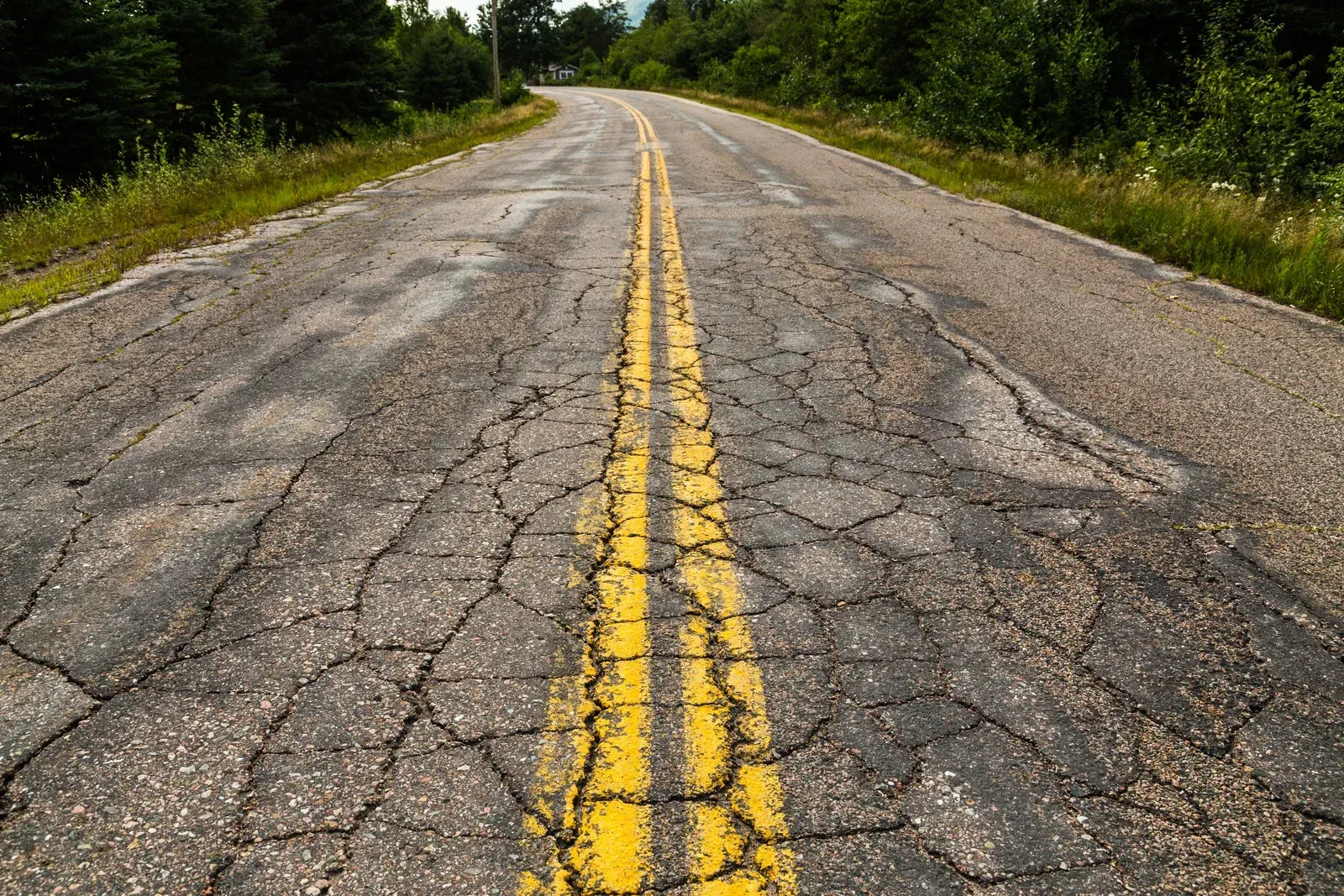
A shallow hole with firm, stable edges and no cracking spreading out from it usually points to a more isolated failure, something a clean patch can often handle once the loose material is cleared out. A hole ringed by alligator style cracking, a web of interconnected cracks that looks like reptile scales, tells a different story. That pattern means the base under a wider area has already given way, not just the spot where the surface broke through, so a patch limited to the hole itself will likely get undermined from the sides within a season. When that is the case, the repair needs to reach past the hole and take in the surrounding weakened pavement and the base underneath it.
Depth matters too. A pothole that only touches the top asphalt layer behaves nothing like one that has punched all the way down into saturated base material, and probing the hole to see how far the soft or broken material extends is a routine part of scoping the job correctly before any new asphalt goes back in.
Pothole Repair Methods, From Quick Patch to Full Rebuild
Once a pothole has been assessed, the method comes down to two things: how permanent the fix needs to be, and what the weather will allow that day.
Cold Patch Repair
This is the fastest option, and the one crews reach for on emergency repairs, since cold mix asphalt can be placed and compacted even in wet or cold conditions when hot mix plants are not running. The tradeoff is durability. Cold patch does not bond to the surrounding pavement the way hot mix does, so it is best treated as a temporary fix that keeps a hole safe until a permanent repair can be scheduled.
Throw And Roll Patching
A step up from a plain cold patch: clear the loose debris out of the hole first, then compact the new material in layers instead of dumping it in all at once. That extra prep stretches the life of the patch noticeably, for only a little more time on site.
Spray Injection Patching
Specialized equipment blows water and debris out of the hole with compressed air, sprays down a bonding tack coat, then injects a mix of asphalt emulsion and aggregate under pressure. It bonds well and covers ground fast, which is why it is a common choice when a lot has several scattered potholes rather than just one.
Hot Mix Repair
Hot mix asphalt is the same material the pavement was built with, kept hot enough to compact properly into the hole. Because it is bonding to itself rather than a different material, a properly placed hot mix patch is generally the most durable option available, though it needs drier, milder conditions to go in right.
Infrared Repair
This method reheats the existing pavement around the pothole first, then crews rake in new hot mix and compact it into that softened area. The old and new asphalt fuse together instead of leaving a seam, which tends to produce a patch with fewer weak edges, though it works best on milder days and clearly defined damage.
Full Depth Reconstruction
When a pothole formed because the base itself gave out, from prolonged saturation, weak original compaction, or years of freeze and thaw cycling, patching the surface alone will not hold. The affected section has to be excavated down through the compromised base, rebuilt with properly compacted aggregate and correct drainage, and topped with new asphalt over that restored foundation. It is a bigger job than a surface patch. But it is the only approach that deals with why the pothole formed instead of just filling in where it broke through.
WARNING: A cold patch is meant to hold a hole safely until a full repair can be scheduled, not to serve as the final fix. Continuing to drive heavy vehicles over a temporary patch for months at a time puts extra stress on pavement that is already weakened at the edges, and it often turns one contained repair into a much larger area of failure.
Frequently Asked Questions
How long does it take for a pothole to actually form once pavement starts failing?
Sometimes just days, once a saturated base thaws out and loses its support. The slow part happens before that, as water works into the pavement and weakens the base over weeks or months of repeated freeze and thaw exposure.
Can a pothole form in pavement with no visible cracks?
Yes, though it is less common. It usually happens at joints, edges, or spots where the original compaction was not quite even. Water does not need a wide crack to get in. A small gap at a seam is often all it takes.
Why do potholes seem to appear overnight during a thaw?
Because the damage builds slowly beneath the surface while the collapse itself happens fast. Once a saturated, weakened base thaws and traffic presses down on the pavement above it, the surface can give way in a single pass.
Does the season affect how well a pothole repair holds up?
It does. Hot mix and infrared repairs need drier, milder weather to bond properly, which is why cold patch tends to cover winter repairs until a more permanent fix can go in once conditions improve.
Is a bigger pothole always a sign of worse underlying damage?
Not by size alone. A wide, shallow hole can sometimes be a smaller repair than a compact hole ringed by alligator cracking, since that cracking usually means the base failure reaches well past what is visible on top.
Can the same pothole come back after it has already been patched?
It can, especially if the original repair only covered the surface without addressing a compromised base underneath. Matching the repair method to how far the damage actually reaches matters more than simply covering the hole back up.
Reading What a Pothole Is Really Telling You
A pothole is never the actual failure, only the visible end of one. Water finds an entry point, the base beneath it loses strength, and traffic finishes the job once nothing solid remains underneath. Reading that sequence correctly, rather than treating every hole as an identical surface fix, is what separates a repair that holds for years from one that reopens by the following winter. The hole tells a story that starts well below where anyone can see it.
Hot Mix Paving MI
has diagnosed and
repaired driveways, lots, and private roads across Grand Rapids, MI for over 20
years, watching this same pattern repeat through countless freeze and thaw seasons. That experience is what allows a crew to look past the visible damage and match the repair to what actually failed underneath. A properly diagnosed pothole stays fixed instead of becoming next season's reminder that something was missed the first time around.